So, what's up with tissue paper?
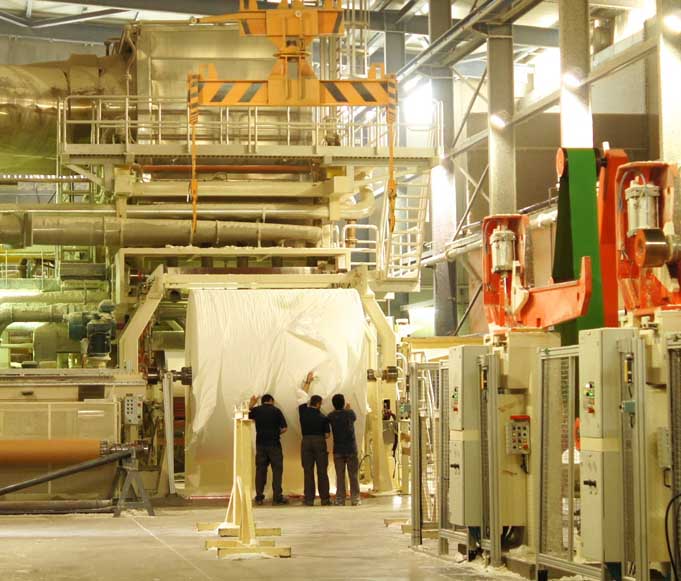
Tissue paper is produced on a paper machine that has a single large steam heated drying cylinder (yankee dryer) fitted with a hot air hood. The raw material is paper pulp. The yankee cylinder is sprayed with adhesives to make the paper stick. Creping is done by the yankee's doctor blade that is scraping the dry paper off the cylinder surface. The crinkle (crêping) is controlled by the strength of the adhesive, geometry of the doctor blade, speed difference between the yankee and final section of the paper machine and paper pulp characteristics.
The key properties of tissue paper are absorbency, thickness (caliper), bulk (specific volume), stretch, appearance and comfort. The properties are controlled by pulp quality, crêping and additives (both in base paper and as coating).
Hygienic tissue paper is commonly used for facial tissue (paper handkerchiefs), napkins, bathroom tissue and household towels. Paper has been used for hygiene purposes for centuries, but tissue paper as we know it today was not produced in the United States before the mid-1940s. In Western Europe large scale industrial production started in the beginning of 1960s.